
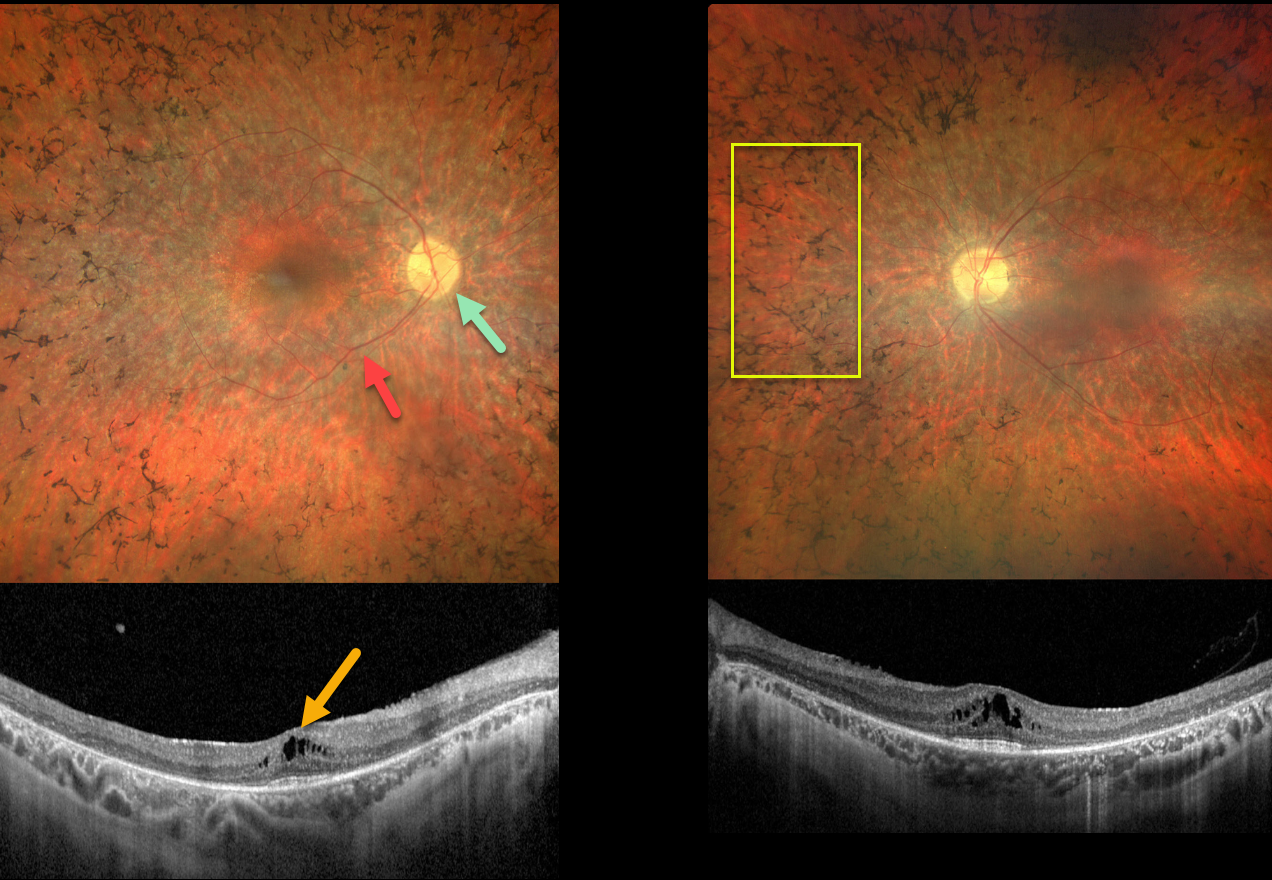
This 33YO female has a known history of retinitis pigmentosa (RP) and congenital neurosensory hearing loss. Her nyctalopia and peripheral vision loss are stable, and vision was 8/20 OD and 15/20 OS.
Color photography of both eyes shows symmetrical pigmentary changes and intraretinal pigment migration (bone spicules) extending from the peripheral maculas into the retinal peripheries. The central maculas look fairly normal, but show schisis in the central inner nuclear layer. The nerves are slightly pale, and the retinal vessels are attenuated.
Genetic testing was heterozygous for a PCHD15 pathogenic variant.
Learning Points:
Usher syndrome (USH) affects over 400 000 persons worldwide and is a major cause of deafness with blindness. Ten USH genes have been identified to date, and three clinical subtypes (USH1-3) have been described. Mutations in the PCDH15 gene that encode for the protocadherin-15 protein cause autosomal recessive Usher syndrome type 1.
Although our patient clinically has USH, genetic testing failed to reveal a causative gene (she only had a single pathogenic gene for a recessive disorder). The negative genetic test result does not mean this patient doesn’t have USH; rather, it reminds us that this test must be interpreted with caution and always with the clinical findings in mind (see Mustafi et al, Ophthalmology Retina 2022;6:702-710).