
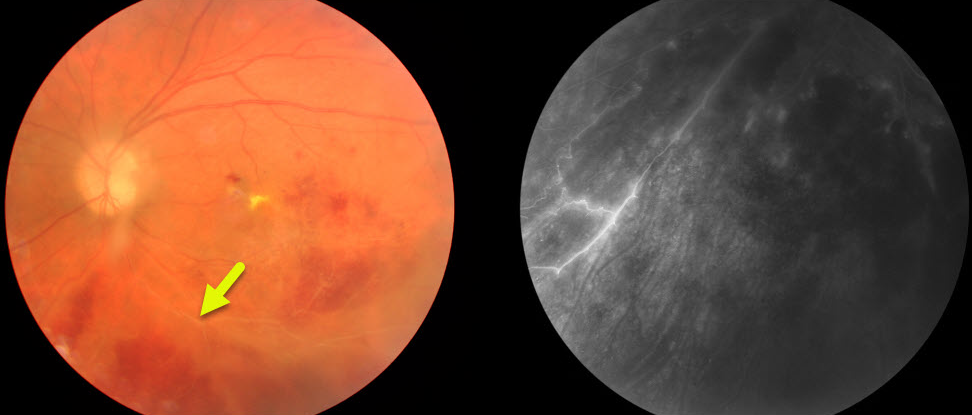
This patient presented with hemorrhagic retinal vasculitis, one of the posterior findings of Behcet’s disease. Vascular occlusions can cause optic atrophy, retinal neovascularization, and vitreous hemorrhage.
Anterior segment findings include uveitis and a sterile hypopyon (not present in this patient).
Learning Points:
Behcet disease is a systemic vasculitis that includes the classic triad of oral ulcers, genital ulcers, and ocular disease. There are no specific tests to confirm the diagnosis of Behcet.
The diagnosis is clinical and includes 1) recurrent oral ulcerations (aphthous or herpetiform) at least three times in one year AND 2) any two of the following: recurrent genital ulcerations, eye lesions (uveitis or retinal vasculitis), skin lesions (erythema nodosum, pseudofolliculitis, papulopustular lesions, acneiform nodules) found in adult patients not being treated with corticosteroids, and a positive “pathergy test” read by a physician within 24-48 hours of testing.
Treatment for the underlying uveitis and vasculitis is complex and includes topical/systemic corticosteroids, as well as immunomodulatory medications. Ocular neovascularization can be treated with anti-VEGF injections and panretinal photocoagulation.