

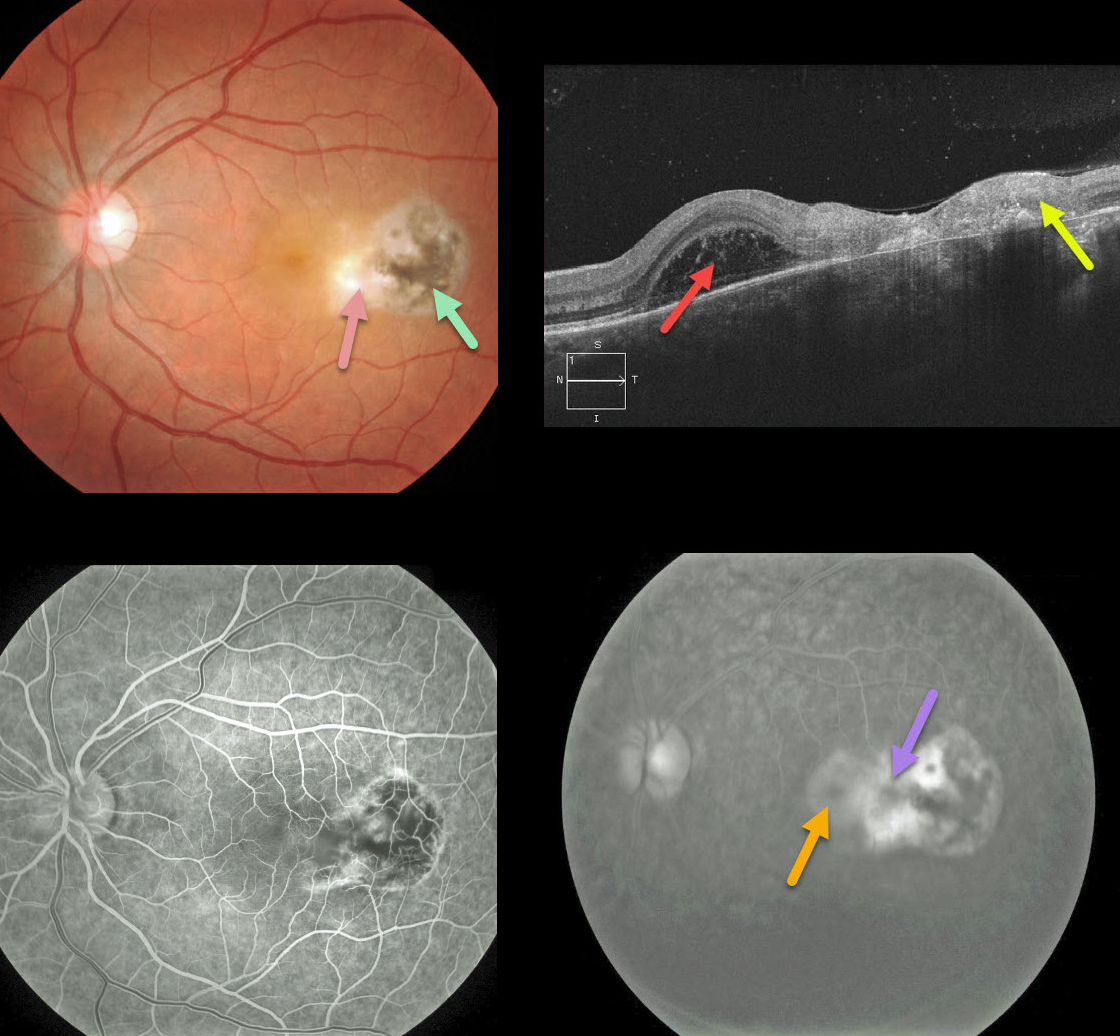
This patient presented with blurred vision from an area of active retinitis nasal to a prior toxoplasmosis scar.
An OCT B-scan shows full-thickness retinal necrosis and scarring temporally, with a foveal bacillary detachment. Tiny vitreous cells are scattered above the retina.
Fluorescein angiography shows staining of the inflamed retina and pooling within the bacillary detachment.
This patient was successfully treated with a 6-week course of oral Bactrim DS.
Learning Points:
Toxoplasmosis, the most common cause of infectious chorioretinitis in humans, is caused by the protozoan parasite, Toxoplasma gondii. It is most commonly transmitted through infected felines or by eating raw meat.
The majority of infections are acquired, although they can also be transmitted congenitally. The body’s immune system is unable to completely kill the organism, which often lies dormant within a chorioretinal scar for years.
When the immune balance favors the encysted organism, active chorioretinitis develops. This usually resolves spontaneously within 6 weeks.
If the optic nerve or macula is threatened, a six-week course of Bactrim DS is recommended (see Ophthalmology 2004;112;1876-1882). Oral prednisone can be added as well to help with severe inflammation.