

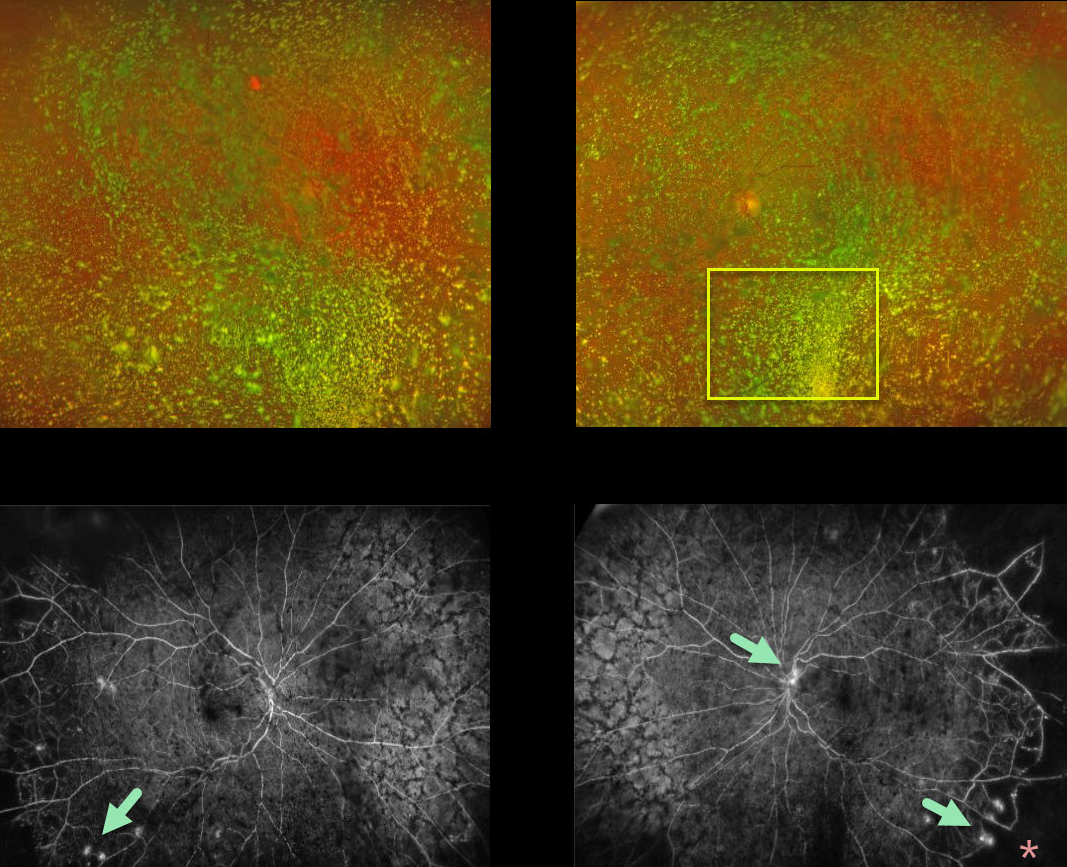
Although this diabetic patient had normal vision with absolutely no symptoms, what we saw on clinical examination and Optos color imaging was nothing but asteroid hyalosis.
Fluorescein angiography (FA) showed bilateral proliferative diabetic retinopathy with areas of leakage and peripheral capillary dropout. In-office panretinal photocoagulation (PRP) was not possible due to the dense asteroid.
We discussed ongoing anti-VEGF injections versus vitrectomy + PRP to clear the visual axis. She decided to proceed with vitrectomy in both eyes.
Learning Points:
Asteroid hyalosis is caused by the accumulation of benign calcium-lipid particles suspended in the vitreous.
Fluoroscein angiography and OCT can image through asteroid hyalosis.