
This 24YO man with Alagille syndrome presented with vision of 20/200 OD and 20/50 OS. There was a long history of bilateral poor vision. He was adopted and is a ward of the state.
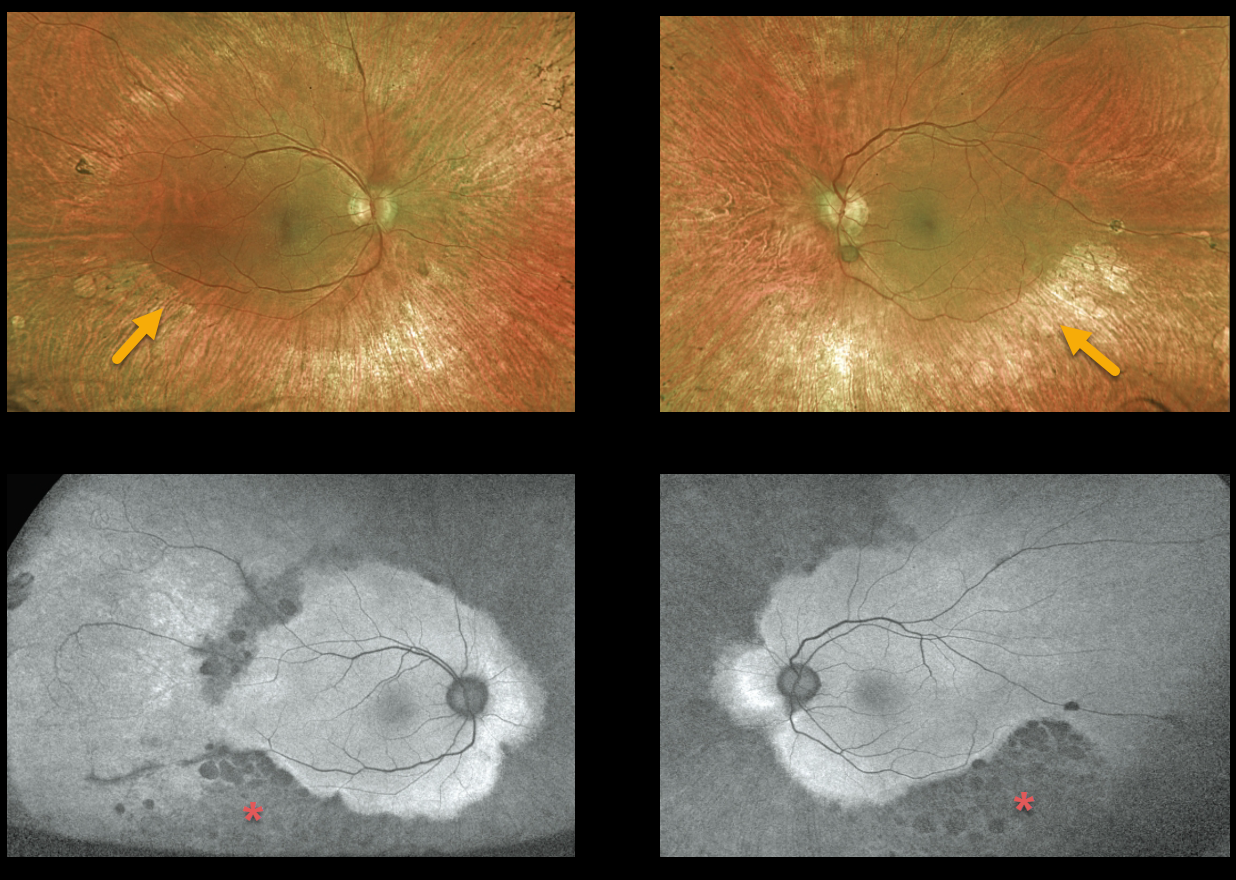
Optos color imaging shows fairly normal maculas with midperipheral encircling pigment loss with some pigment migration.
Fundus autofluorescence (FAF) shows extensive areas of midperipheral and nasal hypo-FAF.
Learning Points:
Alagille syndrome, also known as arteriohepatic dysplasia, is an autosomal dominant, genetically and phenotypically heterogeneous disorder characterized by distinct facial features, including a prominent forehead, deep orbital sulcus, and pointed chin.
It is caused by loss of function of the JAG1 gene, which is located on chromosome 20p12. The JAG1 gene encodes transmembrane proteins responsible for cell signaling during embryonic development, notably in the Notch signaling pathway.
Patients develop intrahepatic cholestatic liver disease, heart abnormalities, hypogonadism, and intellectual disability. Virtually all patients have peripheral retinal pigmentary changes, and three-quarters have anterior chamber angle abnormalities, including Axenfeld and Rieger anomalies (our patient’s slit lamp examinations were normal).
For a recent, comprehensive review of the spectrum of ocular findings in Alagille syndrome, see da Palma et al., Invest Ophthalmol Vis Sci 2021; 62 (7):27.