
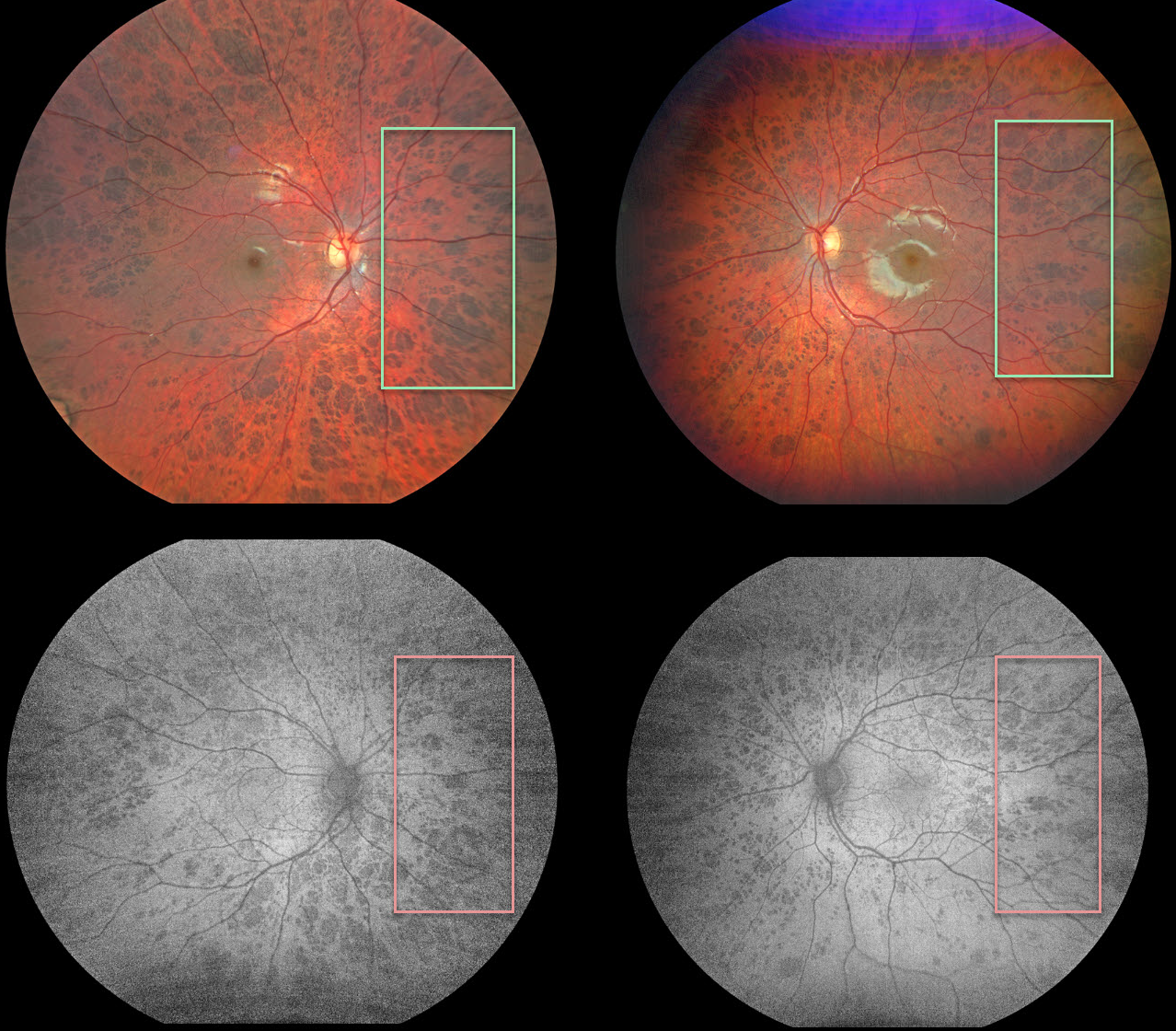
This healthy 8YO was seen for a routine eye examination. Vision was 20/50 OU. Fundus imaging shows extensive bilateral bear track lesions, which are hypoautofluorescent.
Learning Points:
Group-type congenital pigmented nevi of the RPE (bear tracks) is a relatively rare congenital condition characterized by well-demarcated, hyperpigmented, flat, variably sized RPE lesions that resemble bear footprints.
Histopathologically, these lesions are similar to congenital hypertrophy of the RPE (CHRPE), with increased numbers of pigment granules in normal-sized RPE cells. These lesions are benign, cause no visual symptoms, and are not associated with familial polyposis.
The major fluorophore with fundus autofluorescence (FAF) is lipofuscin, which is intraliposomal RPE material generated as byproducts of outer segment metabolism. The outer retina overlying these bear track lesions shows varying degrees of atrophy. This leads to less lipofuscin production with hypo-FAF.