
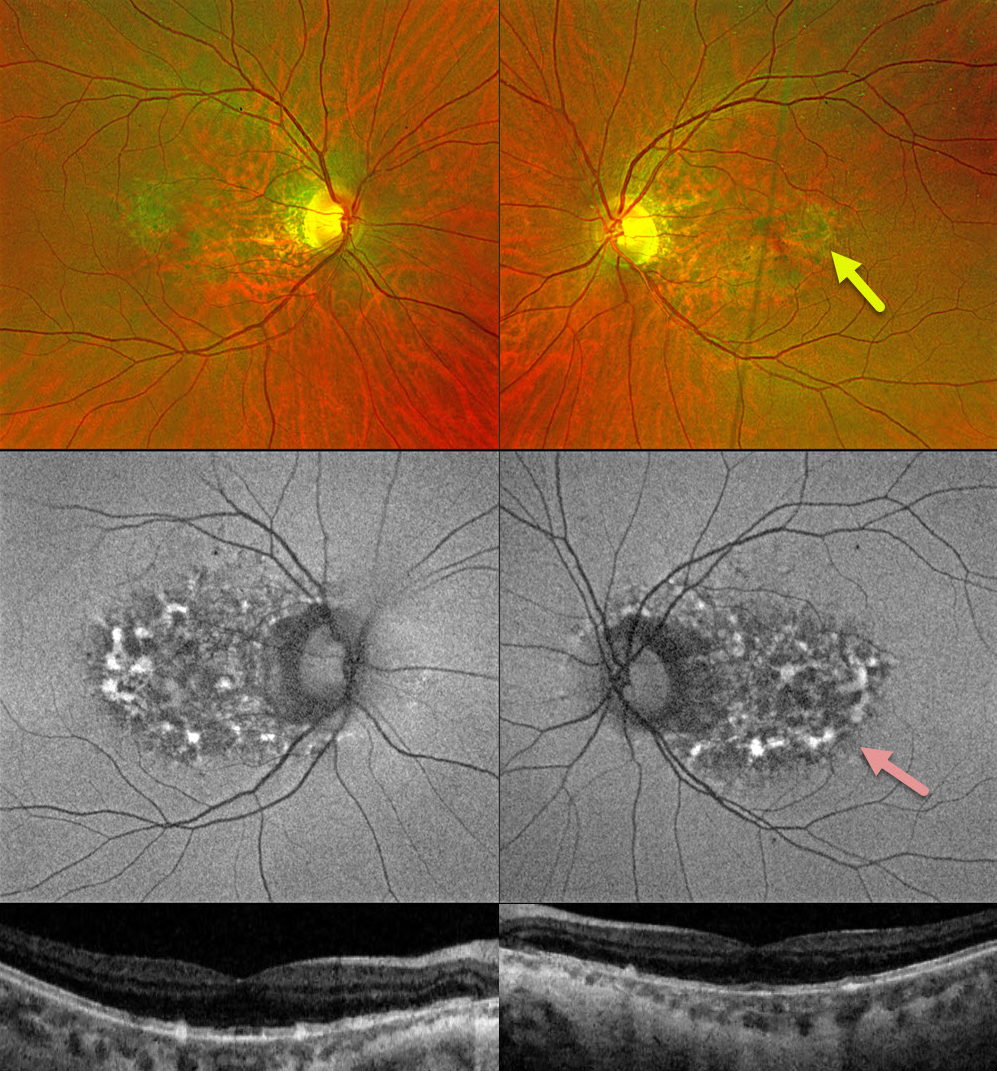
This 48YO was on pentosan polysulfate sodium (PPS, Elmiron) for interstitial cystitis for 2-3 years, but discontinued this drug 2 years earlier. Vision was 20/30 bilaterally.
Fundus color imaging shows bilateral ill-defined macular pigmentary changes. Swept-source OCT shows variable loss of the ellipsoid zone, outer segment bands, and RPE with clumps of hyperreflective material involving or located above the RPE. Optos fundus autofluorescence (FAF) shows patchy hyper- and hypo- FAF extending from the central macula to the nerve.
Learning Points:
Elmiron was approved by the FDA in 1996 for the treatment of interstitial cystitis. A unique PPS retinopathy was recently described, and our patient shows classic findings. Toxicity seems to develop over many years and can mimic more common disorders, including age-related macular degeneration and macular dystrophies.
The risk of toxicity is dose-dependent (Tao et al, Ophthalmology Retina 2025;9:870-882), although toxicity can rarely occur with relatively minimal exposure, as occurred in our patient (Yousif and Johnson, JAMA Ophthalmology 2025;143:362-363). The drug should be discontinued once retinal findings are discovered, although progressive functional and structural changes can develop even after drug cessation (Jung et al, JAMA Ophthalmol 2023;141:260-266).
A recent report found severe asymptomatic adenomatous polyposis in 75% of their PPS maculopathy patients (Feo et al, AJO 2026;287:1-13). Most of their patients required partial or total colectomy or endoscopic resection. They therefore recommended colonoscopy screening in all exposed patients.