

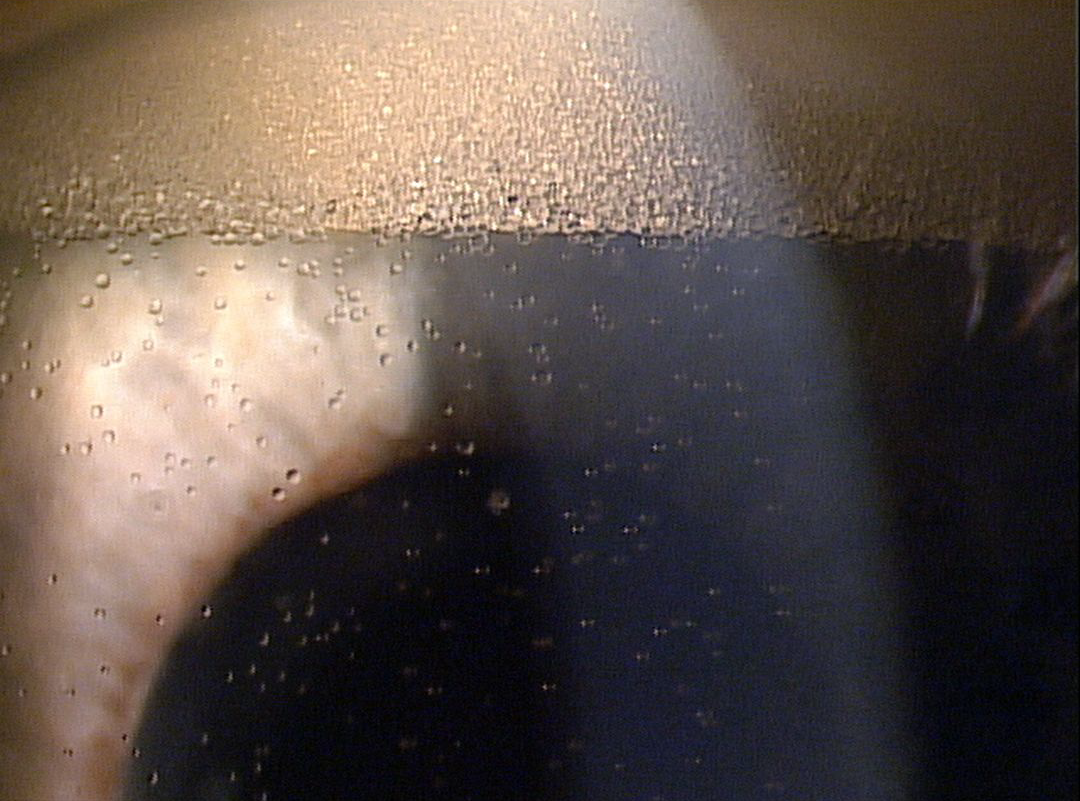
This patient underwent prior successful retinal reattachment surgery with silicone oil and presented with these asymptomatic findings.
Slit lamp photography shows a reverse pseudohypopyon of emulsified silicone oil droplets floating in the anterior chamber. Suspended droplets of oil are noted throughout the aqueous more inferiorly.
Learning Points:
Silicone oil as an adjunct for repairing complex retinal detachments was introduced by Paul Cibis in the early 1960s (Cibis et al, Arch Ophthalmol 1962;68:590-599). It is used primarily for complex detachments at high risk for failure, including severe proliferative vitreoretinopathy and viral retinitis. Although silicone oil is generally well tolerated as a long-term tamponade, it can rarely emulsify, resulting in numerous tiny, opaque droplets. The development of emulsification is multifactorial, including the properties of the oil, the surgical procedure, and postoperative factors.
When severe, the emulsified droplets can cause significant vision loss, requiring their removal. The droplets can also migrate into the anterior chamber, causing a reverse ‘hypopyon’ with secondary elevated intraocular pressure or corneal decompensation.