

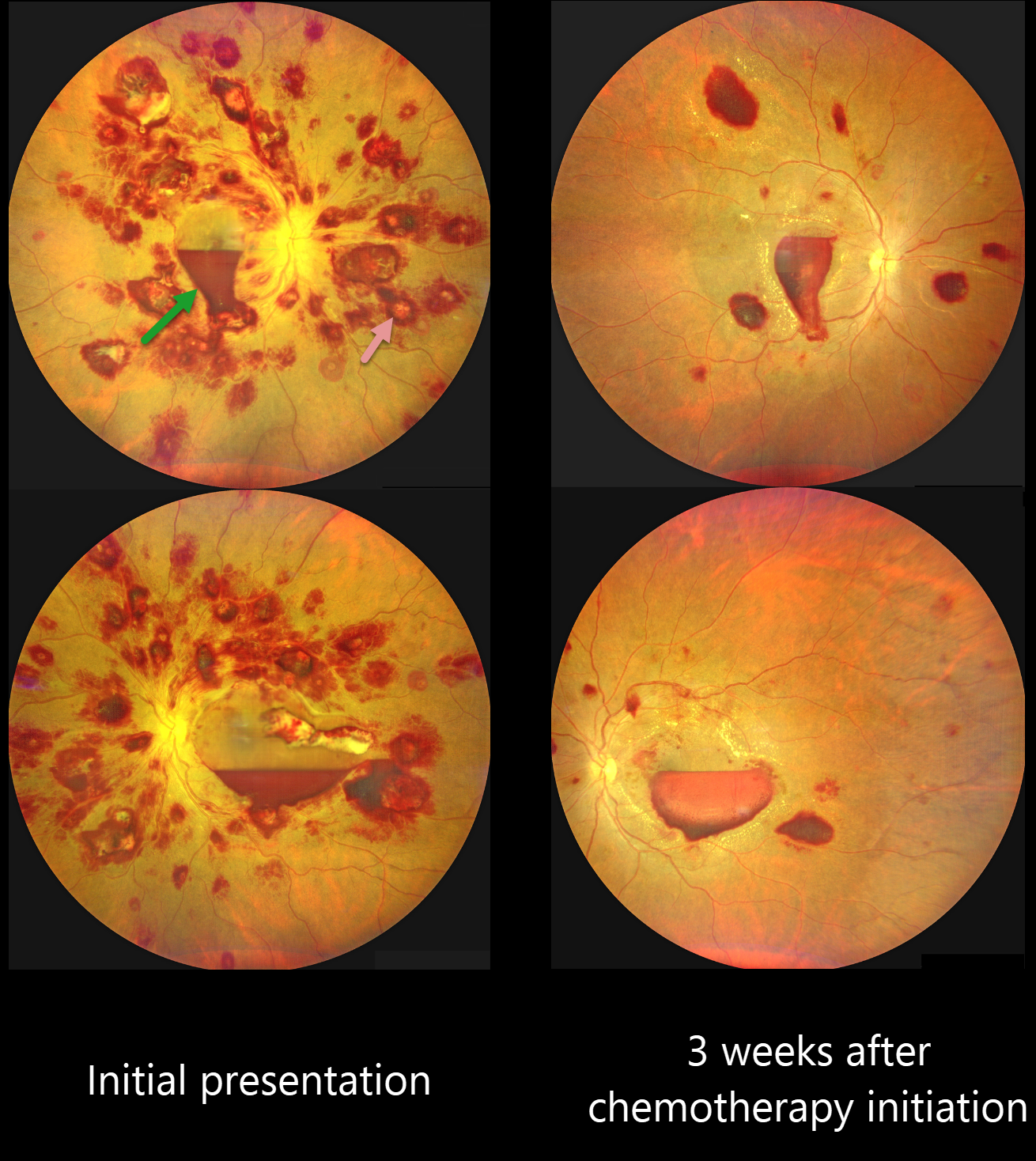
This 42YO previously healthy male presented with one week of bilateral decreased vision. Vision was 20/100 OD and 20/200 OS.
Color photography shows an extensive bilateral nerve fiber layer and deep white-centered retinal hemorrhages. Layered macular sub-internal limiting membrane (ILM) hemorrhages are noted as well, with some yellow devitalized blood in the temporal left macula. Hematologic workup revealed elevated blast cells, severe anemia (HgB 5.4) and thrombocytopenia.
He was diagnosed with acute myeloid leukemia and referred to oncology. He started chemotherapy, and 3 weeks later, his vision improved to 20/70 OU. The HgB was 8.2 with decreased blast cells. The bilateral retinal hemorrhages were markedly decreased.
This case was submitted by Kanwaljeet Harjot Madan.
Learning Points:
The term “Roth spot” was named after Dr. Moritz Roth, who, in 1872, noted white-centered hemorrhages in patients with bacterial endocarditis. He felt that these white spots were septic emboli that originated from an infected cardiac valve. However, similar lesions can be seen in many other disorders, including leukemia, hyperviscosity, anemia, diabetes, and hypertension (Duane et al Ophthalmology 1980;87:66-69). The white material may represent a variety of causes, including fibrin. So, these lesions are best called white-centered hemorrhages, unless one is specifically referring to those found associated with bacterial endocarditis.
Ocular leukemic manifestations are primarily caused by accompanying hematologic abnormalities, including hyperviscosity, anemia, and thrombocytopenia (Soman et al, Ophthalmology Retina 2018;2:17-23). Posterior segment findings include retinal hemorrhages (sub-ILM, nerve fiber layer or deeper, white-centered), cotton-wool spots, dilated retinal veins, and serous retinal detachment. Leukemic infiltration of the optic nerve, retina, and choroid can also occur. The sub-ILM hemorrhages are usually self-limiting and resolve within several months of treating the underlying disease (Ophthalmology Retina 2018;2:494-501).