
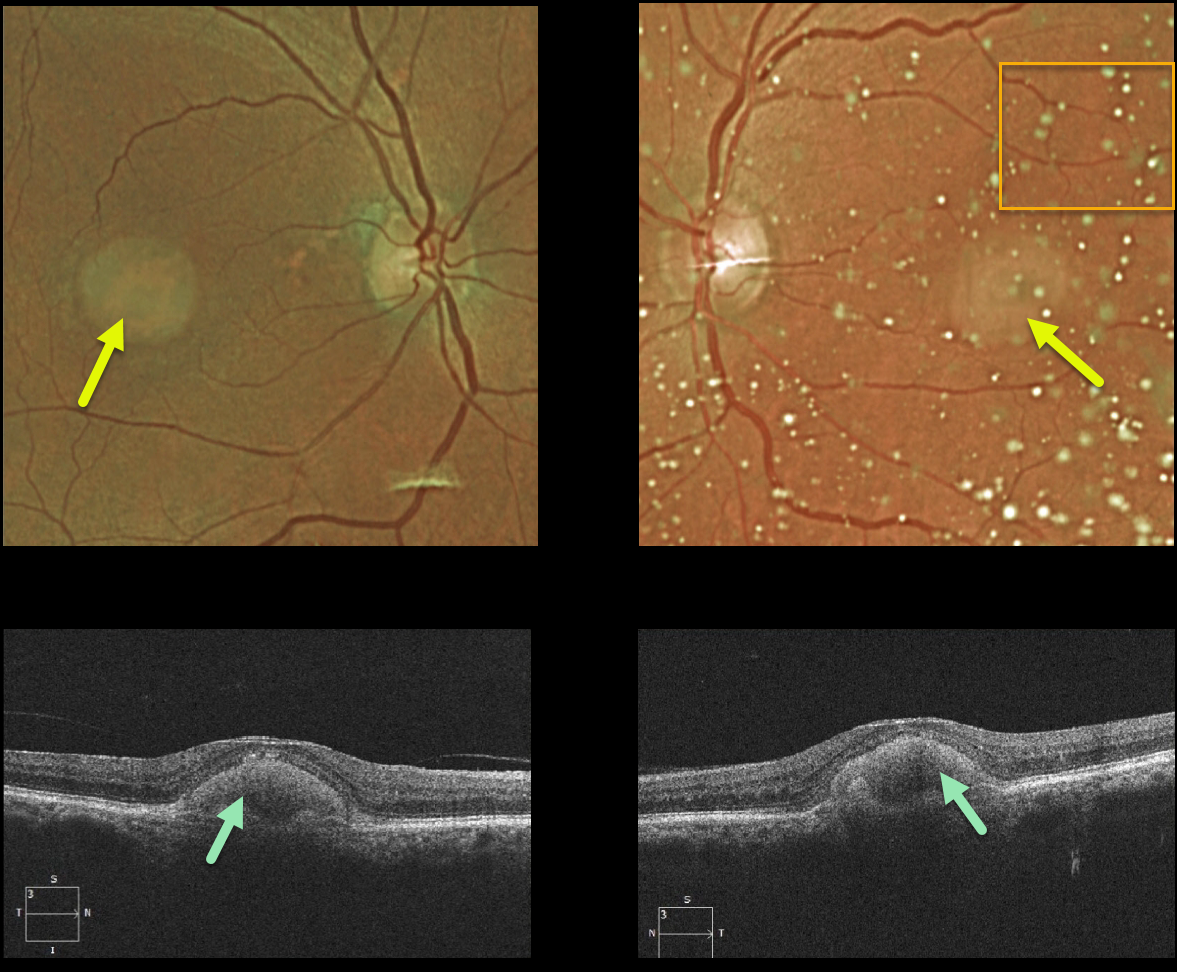
This 87YO female shows classic findings for adult-onset foveomacular vitelliform dystrophy (Adult Best). Vision was 20/60 OD and 20/80 OS Optos imaging shows small, round, symmetrical subfoveal yellow lesions. Moderate asteroid hyalosis is noted as an incidental finding on the OS.
Triton swept-source OCT shows subretinal hyperreflective material above the RPE that extends into and indents the overlying retina.
Learning Points:
Adult Best is associated with a mutation in the BEST1 gene, which encodes the bestrophin-1 protein. Bestrophin-1, a calcium-activated chloride channel, is primarily found in the basolateral plasma membrane of the RPE.
BEST1 mutations cause a variety of phenotypes, including autosomal recessive bestrophinopathy, best vitelliform macular dystrophy, and autosomal dominant vitreoretinochoroidopathy.
These patients tend to maintain fairly good vision. Outer retinal and RPE atrophy can cause central vision loss, as can the rare development of macular neovascularization. Patients should therefore regularly monitor their vision with an Amsler grid.