

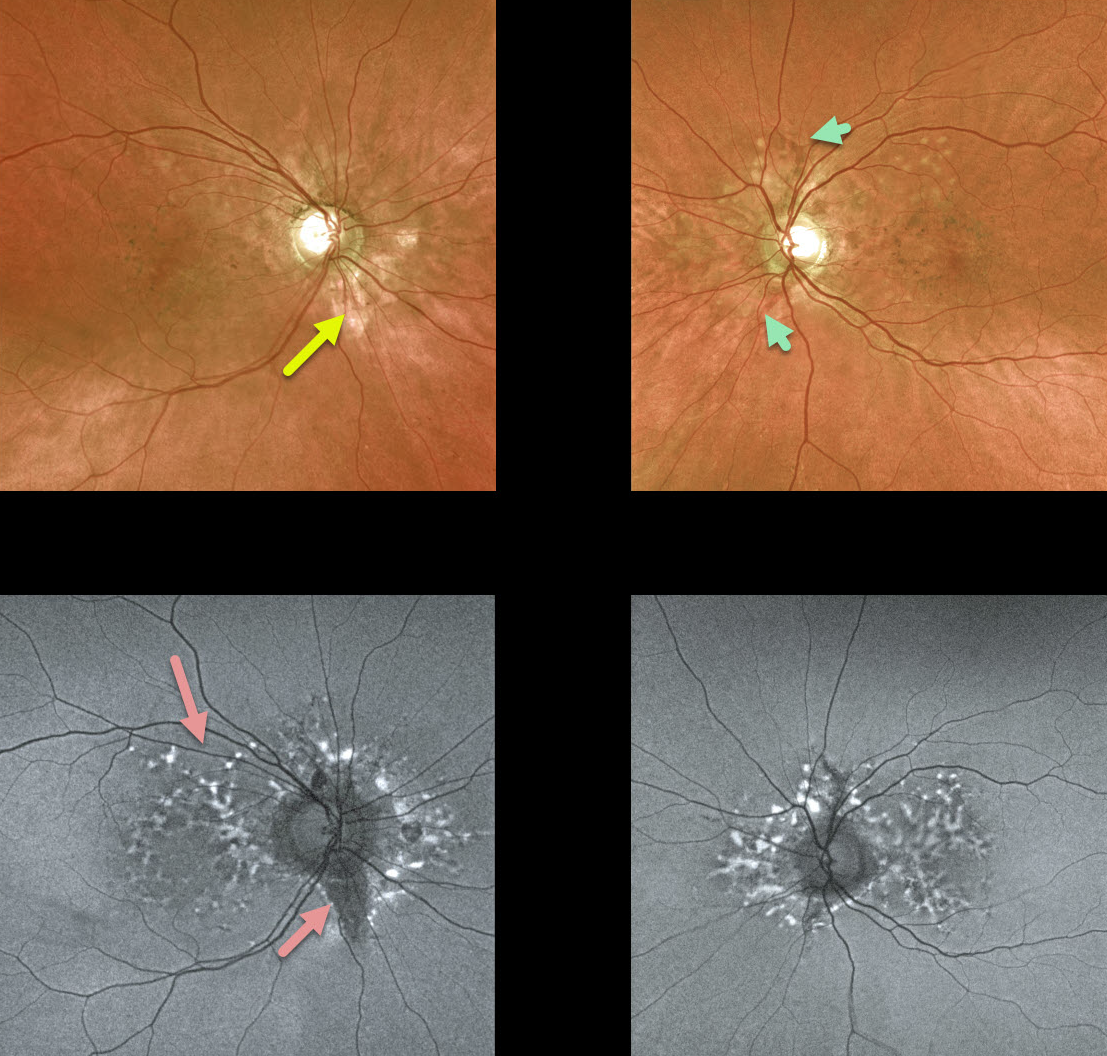
We have been following this 54YO female with pseudoxanthoma elasticum (PXE) for many years. Vision is 20/20 bilaterally, and fortunately, she remains asymptomatic.
She has bilateral macular peripapillary pigmentary changes. Angioid streaks, always tough to find unless the clinician actively looks for them, are not prominent, although a few are visible in her left eye.
Fundus autofluorescence (FAF) shows more dramatic changes, including scattered hyper- and hypo-FAF peripapillary and macular spots.
Her sister became legally blind many years ago from bilateral macular neovascularization (MNV).
Learning Points:
Patients with angioid streaks and pseudoxanthoma elasticum (PXE) can present with retinal findings similar to those of pattern dystrophies.
These patients are at significant risk for macular neovascularization and need to be followed and treated as needed with anti-VEGF agents, as in patients with AMD.