
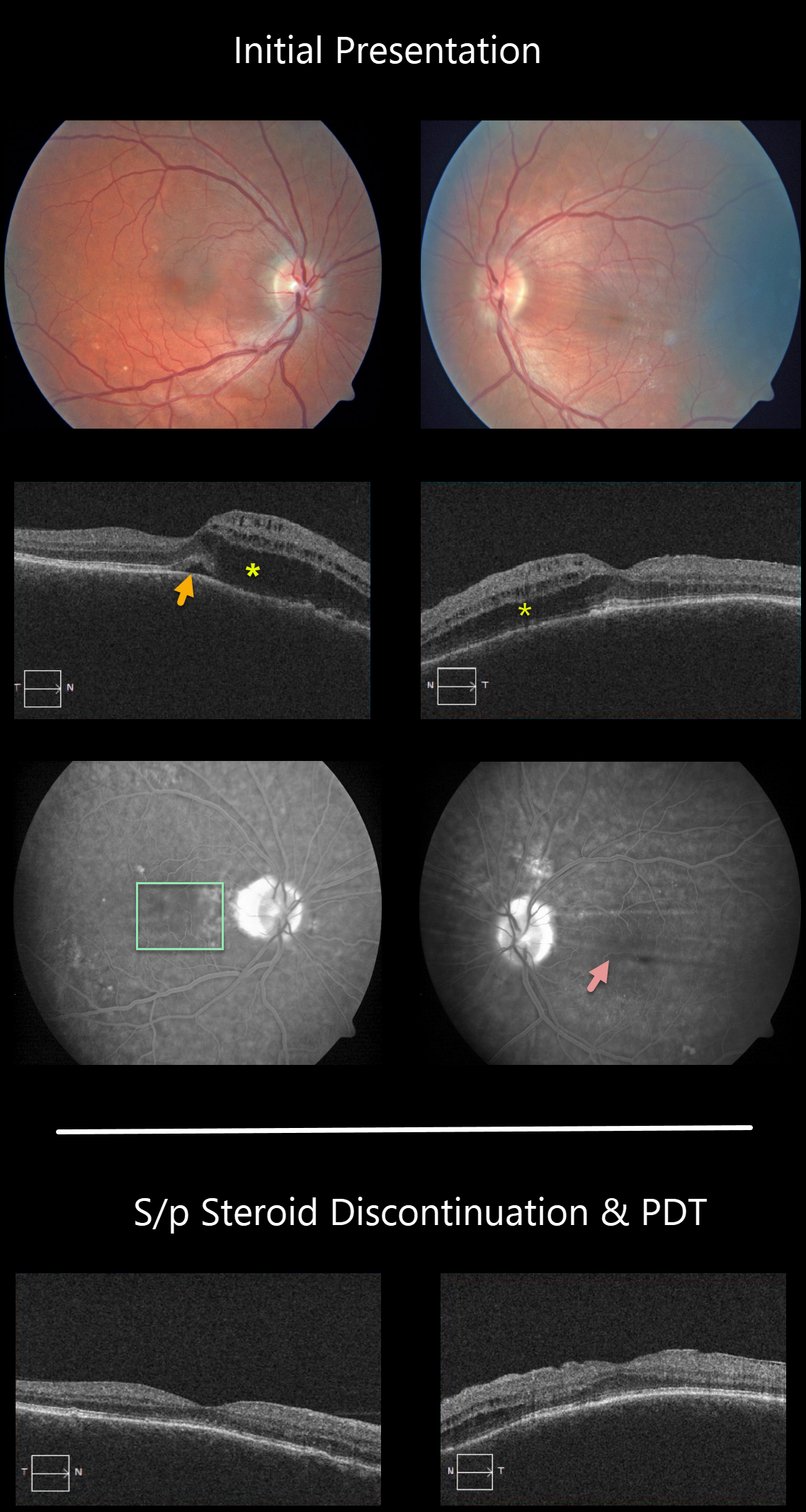
This patient has peripapillary pachychoroid syndrome (PPS), a recently described bilateral condition characterized by nasal macular intraretinal and subretinal fluid.
These eyes can look very similar to those of patients with optic pit maculopathy, but without the pit. Additional findings include a thicker nasal macular choroid than temporal macular choroid, choroidal folds (75% of cases), shorter axial lengths (<23mm), and hyperopia.
There is no angiographic evidence of leakage despite fluid noted on OCT.
The patient worsened when initially placed on steroids, but made a tremendous improvement after steroids were discontinued, followed by photodynamic therapy.
Learning Points:
PPS is part of the pachychoroid spectrum, where patients have a thick choroid. Probably the most common and well-known pachychoroid disease is idiopathic central serous chorioretinopathy. Just like ICSC, this condition worsens with steroid use.
See Phasukkijwatana et al Retina, 2018;38:1652-1657 for more on PPS.