
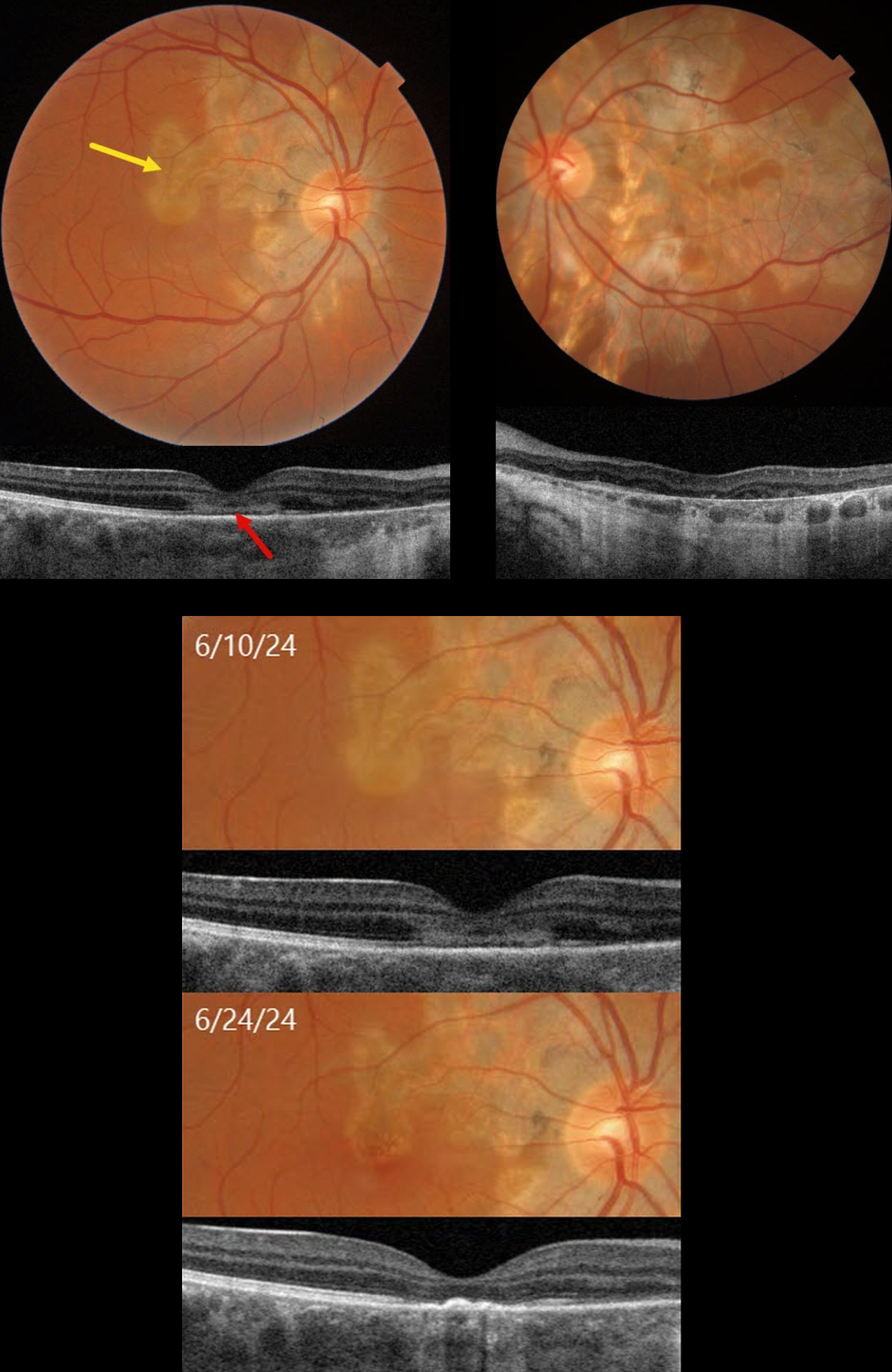
This healthy 37YO male with a known history of serpiginous chorioretinopathy presented with a few weeks of decreased vision in his left eye. Vision was 20/30 OD and 20/400 OS.
Triton color imaging shows bilateral chorioretinal scarring that radiates outwards from each optic nerve. An area of somewhat opaque active outer retinal inflammation just spares the right foveal center, with inactive scarring extending through the left fovea. The active lesion is hyperreflective on Triton swept-source OCT.
Tuberculosis testing was negative. Oral prednisone was started, and 2 weeks later, vision remained at 20/30, but there was marked regression with secondary scarring of the new lesion.
Learning Points:
Serpiginous choroiditis is an idiopathic, usually bilateral chorioretinal inflammatory condition, most commonly found in middle-aged men (Khanamiri and Rao, Surv Ophthalmology 2013;58:203-232). Recurrent areas of inflammation develop along the edge of a previous scar, producing scarring that meanders from the optic nerve outward into the macula. Vision is good unless scarring or macular neovascularization extends through the macular center. There is no consensus on the optimal systemic treatment, including corticosteroids and systemic steroid-sparing agents.