

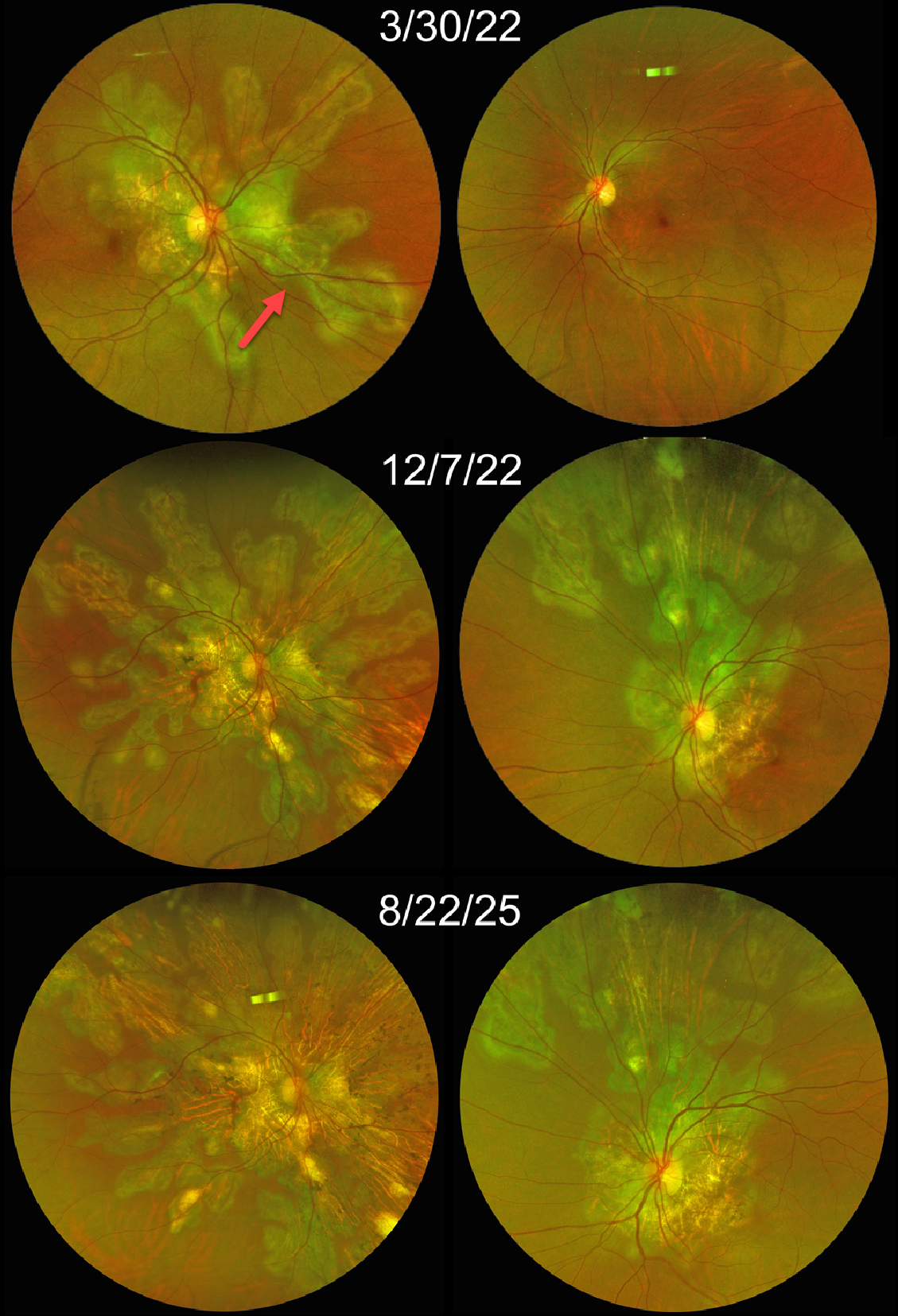
This 41YO female presented on 3/30/22 with a paracentral scotoma and metamorphopsia in her right eye. Vision was 20/800 OD and 20/20 in his initially normal OS.
Optos color RG imaging at that time shows multifocal meandering scars radiating outwards from the disc and macula, consistent with serpiginous chorioretinopathy. All scarring appears inactive except for a possible active lesion inferonasally. General laboratory testing and chest CT were all negative. The PPD was positive; however, given that she lived in a TB-endemic area, this was further evaluated with QuantiFERON, which was negative.
Over the following months, the disease evolved in a chronic relapsing pattern, with recurrent and aggressive activity despite intravenous methylprednisolone pulses along with cyclophosphamide.
When last examined on 8/22/25, vision was hand motion OD and 20/150 OS. Current systemic therapy includes azathioprine 100 mg and prednisone 60 mg daily. She is currently awaiting initiation of adalimumab as biologic immunomodulatory therapy, with the goal of achieving better inflammatory control and reducing cumulative corticosteroid exposure.
Learning Points:
Serpiginous choroiditis is an idiopathic, usually bilateral chorioretinal inflammatory condition, most commonly found in middle-aged men (Khanamiri and Rao, Surv Ophthalmology 2013;58:203-232). Recurrent areas of inflammation develop along the edge of a previous scar, producing scarring that meanders from the optic nerve outward into the macula. Vision is good unless scarring or macular neovascularization extends through the macular center. There is no consensus on the optimal systemic treatment, including corticosteroids and steroid-sparing agents.