

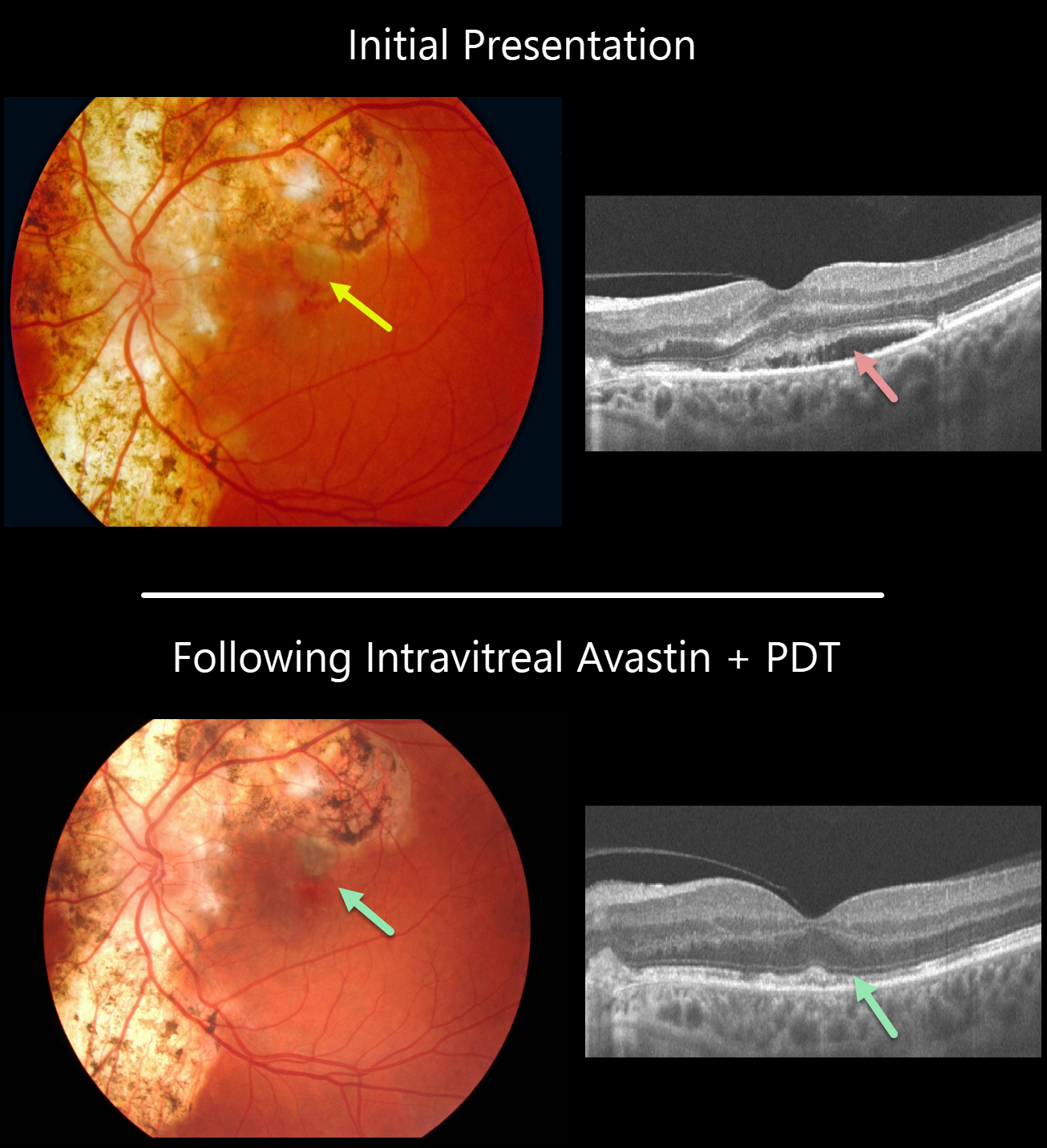
This patient presented with bilateral serpiginous chorioretinopathy scarring (only the left eye pictured). A pigmented macular neovascularization (MNV) with associated subretinal pigment and blood was noted in the superior left fovea. Subretinal fluid is noted on OCT scanning. The MNV was treated with a combination of photodynamic therapy and intravitreal Avaston.
Vision improved from a preoperative 20/400 to 20/30 with resolution of all fluid and blood. The patient continues to need PRN anti-VEGF injections in his left eye.
Learning Points:
Serpiginous choroiditis is an idiopathic, usually bilateral chorioretinal inflammatory condition most commonly found in middle-aged men.
Recurrent areas of inflammation develop along the edge of a previous scar, producing scarring that meanders from the optic nerve outward into the macula.
Vision is good unless scarring (as in this patient) or macular neovascularization extends through the macular center.