

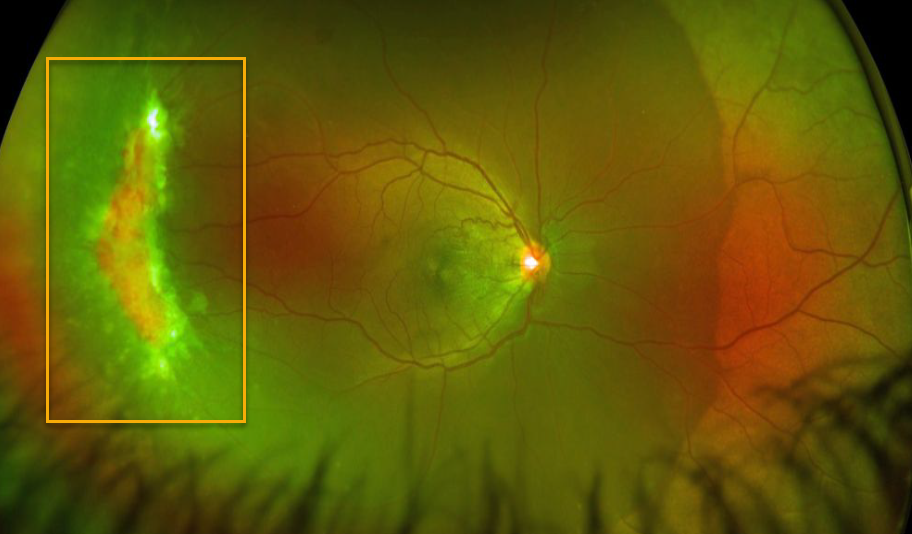
This patient, courtesy of Southern College of Optometry, presented with a large temporal peripheral area of active neovascularization from proliferative sickle cell retinopathy in the right eye. The left fundus was normal.
Learning Points:
Patients with sickle cell disease develop symptoms throughout their body from stiffened sickled red blood cells blocking capillary beds.
In the eye, this manifests as proliferative sickle cell retinopathy (PSR) with sea-fan shaped areas of peripheral retinal neovascularization developing at the junction of perfused and ischemic retina.
Complications include vitreous hemorrhage and traction retinal detachment.
Treatment with peripheral scatter laser is somewhat controversial since, unlike more typical proliferative retinopathies (ie from diabetes and branch retinal vein occlusions), these new vessels tend to auto-infarct.