
A 30YO female presented with a 1.5-year history of bilateral floaters and blurred vision. She was diagnosed elsewhere with ‘choroiditis’ and treated with oral steroids and azathioprine, with 2 recurrences. When seen in our office, vision was 20/30 OU.
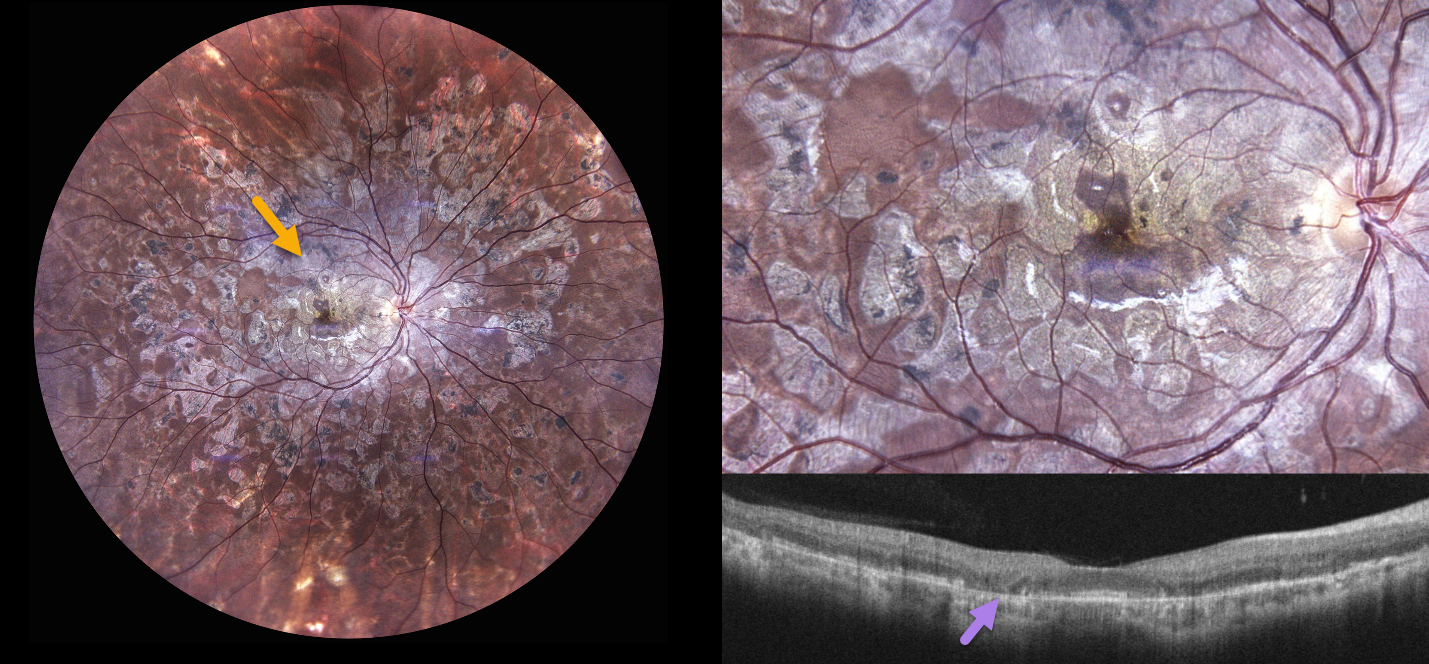
Color photography OD shows extensive, variably confluent, and meandering chorioretinal scarring extending from the disc and macula to the retinal periphery. The foveal center is just spared. OCT scanning shows variable outer retinal and RPE atrophy. Identical findings were noted in her left eye (not shown).
Tuberculin skin testing and QuantiFERON-TB Gold were positive. She was referred to pulmonary and infectious disease specialists, was diagnosed with latent TB, and started on anti-tuberculosis treatment (ATT) with tapering oral steroids.
Learning Points:
Although TB most commonly presents with pulmonary involvement, extrapulmonary sites can involve the gastrointestinal, skin, cardiovascular, genitourinary, and central nervous systems, as well as the eyes. Ocular involvement, like syphilis, can mimic virtually any type of uveitis, including anterior, intermediate, posterior, and panuveitis, retinitis, and retinal vasculitis, neuroretinitis, optic neuropathy, choroidal granuloma, choroiditis, and scleritis.
Tubercular serpiginous-like choroiditis mimics serpiginous but affects younger patients with more multifocal and peripheral recurrences, foveal sparing, vitritis, and progression if untreated (Agarwal et al, AJO 2020;220:160-169). Although the exact mechanism is not yet clear, a direct or indirect infectious trigger by the Mycobacterium tuberculosis is thought to cause choroiditis. Its origin is probably immunogenic, as it appears to respond to corticosteroids and other immunosuppressants. Our patient was a bit unusual in that he required systemic steroids, ATT, and adalimumab to finally control his disease.